
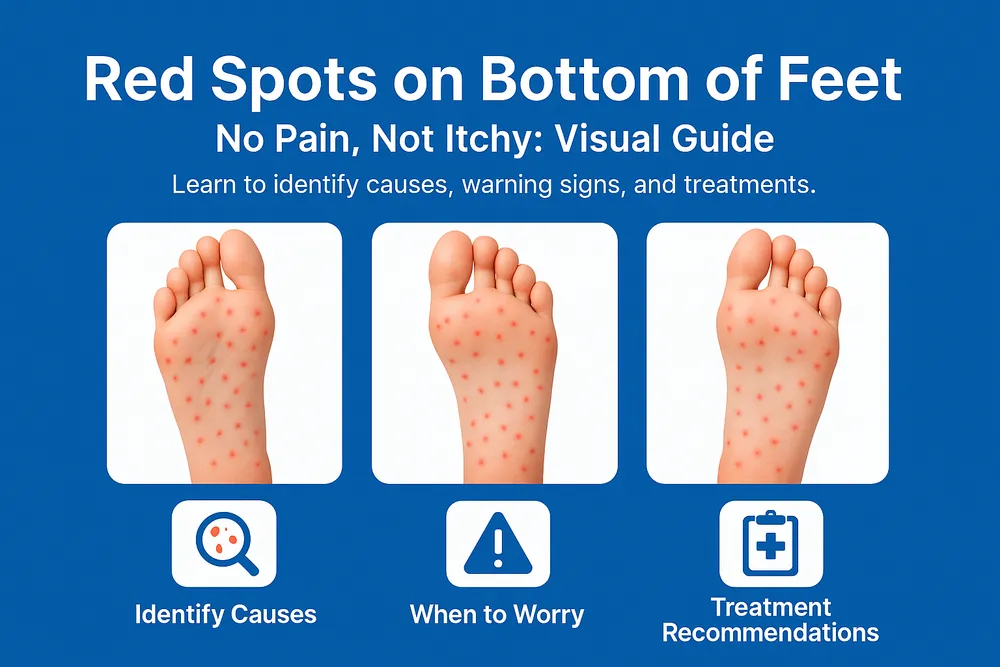
At PodiatryIQ.com, we often see patients who are puzzled by red spots on the bottom of their feet that don’t hurt or itch. Many arrive concerned it could be something serious, while others have ignored the spots for months. Drawing on our experience in podiatric assessment, we created this visual guide to help you compare what you see on your own feet with real-world examples we encounter in practice. Beyond the photos, we’ll share insights on which causes are usually harmless, which ones warrant closer attention, and the professional treatments we’ve seen work best. By combining clear explanations with practical first-hand guidance, our goal is to help you feel more confident about understanding these changes and knowing when to seek care.
Top Takeaways
- Most red spots are harmless (friction, pressure, minor vessel changes).
- Spots that linger, spread, or change may signal health issues.
- Pain isn’t required—many warning spots are painless.
- People with diabetes or circulation problems should be extra cautious.
- Early podiatry care prevents small issues from becoming serious.
Table of Contents
Understanding Red Spots on the Bottom of Feet
Noticing red spots on the soles of your feet that aren’t painful or itchy can be confusing. In most cases, these spots are not urgent, but they can have different causes worth knowing.
Common Causes
- Friction or Pressure: Spots often appear where shoes rub or where the foot bears extra weight.
- Minor Blood Vessel Breaks: Small capillaries may burst from standing, exercise, or minor trauma, leaving tiny red marks.
- Allergic or Contact Reactions: Even without itching, mild irritation from shoes or detergents can create red patches.
- Underlying Health Conditions: Less commonly, spots may signal issues like diabetes-related circulation changes, vascular concerns, or infections.
When to Worry
- Spots spreading quickly or changing color.
- Associated swelling, warmth, or tenderness.
- Spots that don’t fade after a few weeks.
- Accompanied by other symptoms like fever or leg pain.
If any of these apply, it’s best to seek professional podiatric evaluation.
Professional Treatment & Care
- Observation: Many spots resolve on their own with rest and proper footwear.
- Podiatric Care: A foot specialist can identify causes with physical exams and, if needed, imaging or lab tests.
- Targeted Treatment: Care may include footwear adjustments, topical treatments, or addressing underlying health issues.
Key Takeaway
While red spots on the bottom of your feet without pain or itching are often harmless, they can sometimes point to deeper issues. At PodiatryIQ.com, we emphasize that understanding the cause is the first step to peace of mind and healthier feet.

“In our clinical experience at PodiatryIQ.com, most red spots on the soles that aren’t painful or itchy turn out to be harmless pressure changes or minor capillary breaks. The key is knowing when they don’t follow the usual pattern—like spreading quickly, not fading, or being paired with other symptoms. That’s when it becomes important to investigate further. Our goal is to give patients the clarity they need, so they’re not left worrying or overlooking something more serious.”
Case Study & Real-World Examples
1. Everyday Friction Spots (Harmless)
- Who: Marathon runner with small red spots on the balls of his feet.
- Cause: Repetitive friction and shoe pressure.
- Treatment: Shoe adjustments + cushioned insoles.
- Outcome: Spots faded within weeks.
- Insight: Most red spots in active patients are pressure-related and harmless.
2. Persistent Red Spots (Concerning)
- Who: Patient with red patches lasting over 2 months.
- Symptoms: Mild swelling, no pain or itching.
- Diagnosis: Early vascular changes linked to diabetes.
- Treatment: Coordinated podiatric + primary care intervention.
- Outcome: Prevented progression of systemic condition.
- Insight: Persistent spots can be early warning signs of circulation issues.
Key Takeaways
- Harmless: Spots that fade after rest or footwear changes.
- Concerning: Spots that linger, spread, or come with swelling/other symptoms.
- What We’ve Seen at PodiatryIQ.com: The story behind the spots often matters more than the spots themselves.
Supporting Statistics & Insights
- Most people ignore early signs
- 73% of Americans report foot symptoms yearly.
- Only 12% see a podiatrist (pmbc.ca.gov).
- Insight: At PodiatryIQ.com, we often see delayed visits—red spots that could have been managed early become bigger problems.
- 73% of Americans report foot symptoms yearly.
- Daily foot checks are essential
- Federal guidelines recommend daily self-exams (govinfo.gov).
- Look for swelling, redness, or spots—even without pain.
- Insight: Many red spots we’ve treated were painless but signaled circulation issues or shoe-related injuries.
- Federal guidelines recommend daily self-exams (govinfo.gov).
- Diabetes makes early detection critical
- 19–34% lifetime risk of diabetic foot ulcer (DFU).
- 20% require amputation.
- 10% die within one year of first DFU diagnosis (niddk.nih.gov, diabetesjournals.org).
- Insight: We’ve seen persistent red spots serve as the first visible sign of vascular stress in diabetic patients.
- 19–34% lifetime risk of diabetic foot ulcer (DFU).
Key Takeaway
Early evaluation = peace of mind + prevention of serious complications.
Many spots are harmless, but persistent, unexplained ones can be red flags.
Final Thought & Opinion
Noticing red spots on the bottom of your feet with no pain or itching can be worrying. Based on our experience at PodiatryIQ.com, most are harmless—but some are worth attention.
What We’ve Seen
- Harmless: Spots that fade quickly, usually from pressure or friction.
- Concerning: Spots that linger, spread, or change in appearance.
- High-Risk Patients: In diabetes or vascular disease, spots can be the first visible warning sign.
Our Perspective
- Many patients wait too long because there’s no pain.
- Early evaluation often prevents small issues from becoming serious.
- Awareness + action = peace of mind and healthier feet.
Key Opinion
At PodiatryIQ.com, we believe education, clear visuals, and expert insight empower patients to make better decisions. If red spots don’t fade, don’t ignore them—get checked.
Frequently Asked Questions (FAQ)
1. What do red spots on the bottom of feet with no pain or itching usually mean?
Most are harmless and often caused by friction, shoe pressure, or minor blood vessel changes. They often fade on their own.
2. When should I worry about red spots on my feet?
Seek medical advice if the spots:
- Last more than a few weeks
- Spread or change in color
- Come with swelling, warmth, or other symptoms
3. Can painless red spots be linked to health conditions?
Yes. While many are benign, some can be early signs of circulation problems, diabetes-related changes, or vascular issues.
4. Do I need to see a doctor if the spots don’t hurt or itch?
If they disappear quickly, usually no. But if they persist, worsen, or occur in high-risk patients (such as those with diabetes), a podiatry evaluation is recommended.
5. Are there pictures that can help me compare my red spots?
Yes. Visual guides—like those provided by PodiatryIQ.com—show examples of common causes versus concerning signs to help you decide if medical care is needed.